Getting started with RC racing
Everything you need to start driving, wrenching and racing on asphalt at a relaxed pace.
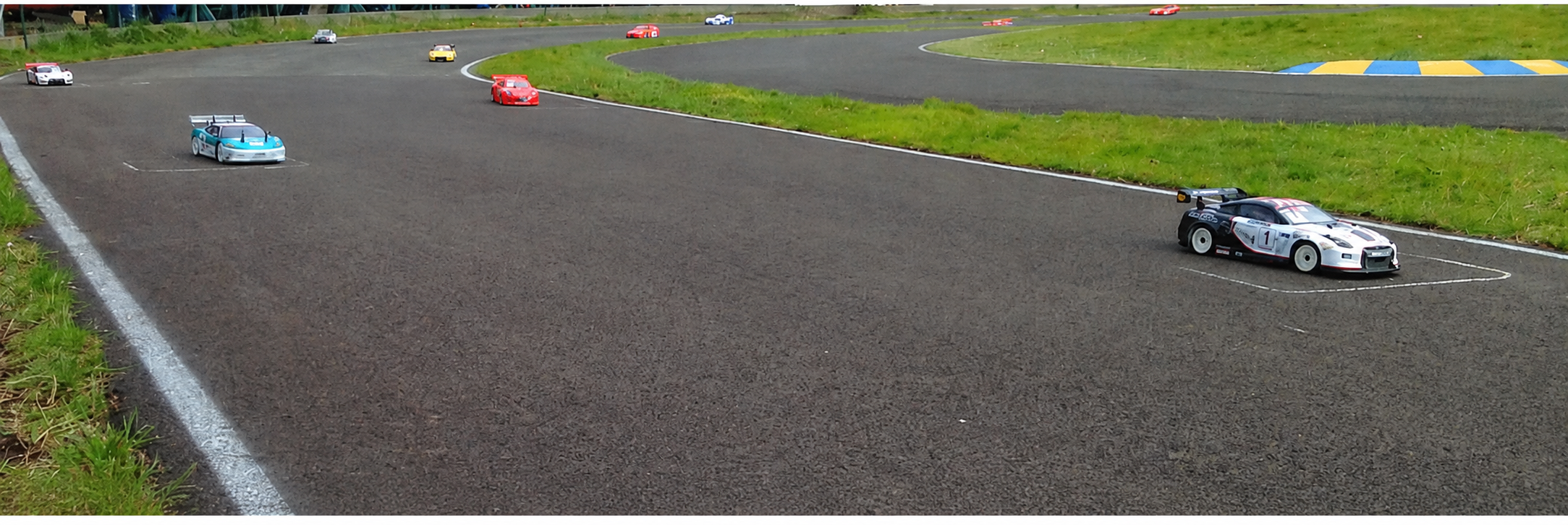
RC racing on asphalt has been a versatile sport and hobby since the early 1970s. There are club and national races, as well as European and world championships. Costs and complexity can be as high as you want.
But it certainly does not have to be expensive, especially compared with many other sports and hobbies. It combines driving, racing, technology, model building and tinkering.
At HFCC we only drive electric cars, scale 1:10. This is the largest class worldwide. Some people drive fuel-powered cars, usually scale 1:8 or even 1:5, but that is not what we run at HFCC.
What you need to begin
- Transmitter controller
- Car electric 1:10 scale
- Battery plus a suitable charger
- Body shell often included with entry-level cars
- Tyres suitable for track and class
Start with a plastic car
Most beginners start with plastic cars. They can take a bump and are perfect for learning to drive.
Cars often come as kits. That takes a little getting used to, but before long you will be taking your car apart and putting it back together as if you have always done it.
If something breaks or wears out, it can be replaced easily. Club members can tell you what is useful and how to handle it, so you are never on your own.
Well-known brands:
- Tamiya
- HPI
- Traxxas (off-road)
These are ideal entry-level and mid-range cars. They are easy to build and the designs do not change much.
From hobby to competition
If you want to go further, you move towards competition cars. These are made from carbon and high-quality materials and can reach speeds above 100 km/h.
Well-known competition brands:
- Xray
- Schumacher
- Awesomatix
- Mugen
The fact that these cars are fast is no guarantee for more fun or better racing enjoyment. It is spectacular though, and you can tune these cars very precisely once you have learned how to set them up.
The difference, apart from being more expensive, is that they can steer more precisely. But when you are learning, an entry-level car is more suitable and cheaper.
Price indication
| Situation | Indication | Note |
|---|---|---|
| Second-hand entry-level car | About EUR 250 | Often ready to run and sometimes including a transmitter (new transmitter about EUR 85). |
| Everything new according to club configuration | About EUR 500 | Including batteries and charger. See also the youth lessons. |
| New competition car | About EUR 1000 | Often with high-quality parts. |
| Used competition car | About EUR 350 - EUR 600 | Depending on age, condition and included parts. |
If you are learning, buying new is not necessary. There is a lot of different equipment for sale, so good advice at the club helps you make the right choice.
2WD and 4WD
There are two main drivetrain types: 2WD rear-wheel drive and 4WD four-wheel drive. Most cars use rubber tyres. There are also foam tyre classes, such as indoor 1:12, and classes such as Tamiya Group C and Pro10.
At HFCC we start youth lessons with the DT-03 buggy. After about a year you move on to the Tamiya TT-02R; by then you already have a transmitter, batteries and other equipment, so you mainly need a different car. Both cars can be used in club races and the TT-02R can grow from a beginner car into a serious, fast race car.
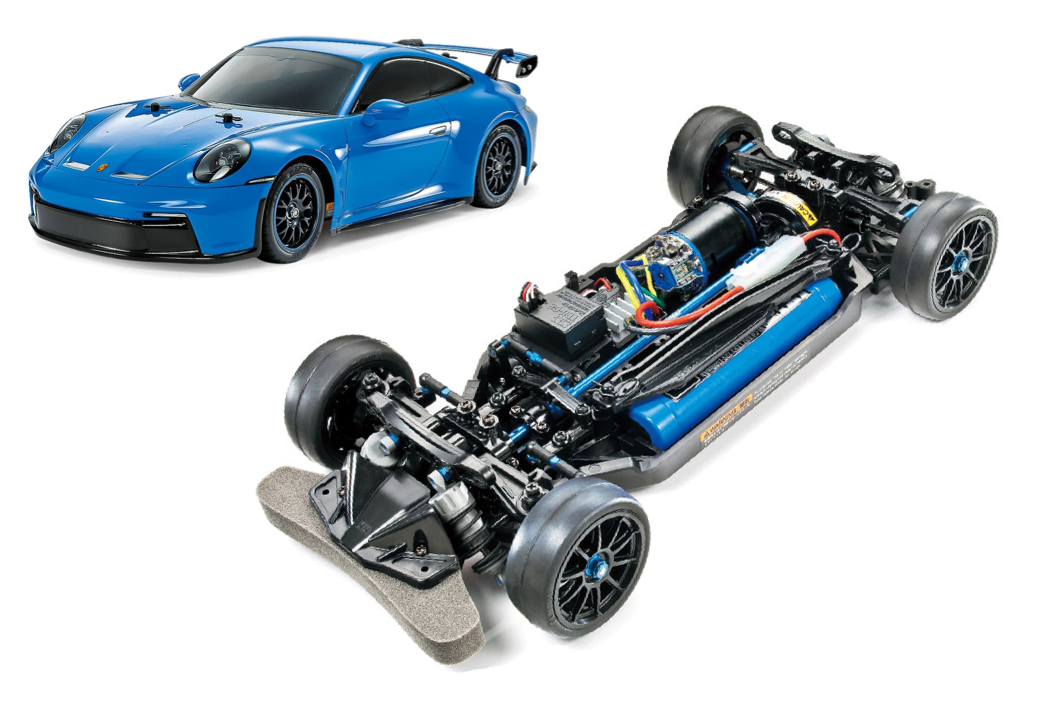
Tamiya TT-02R
4WD touring car, suitable for asphalt and club races.
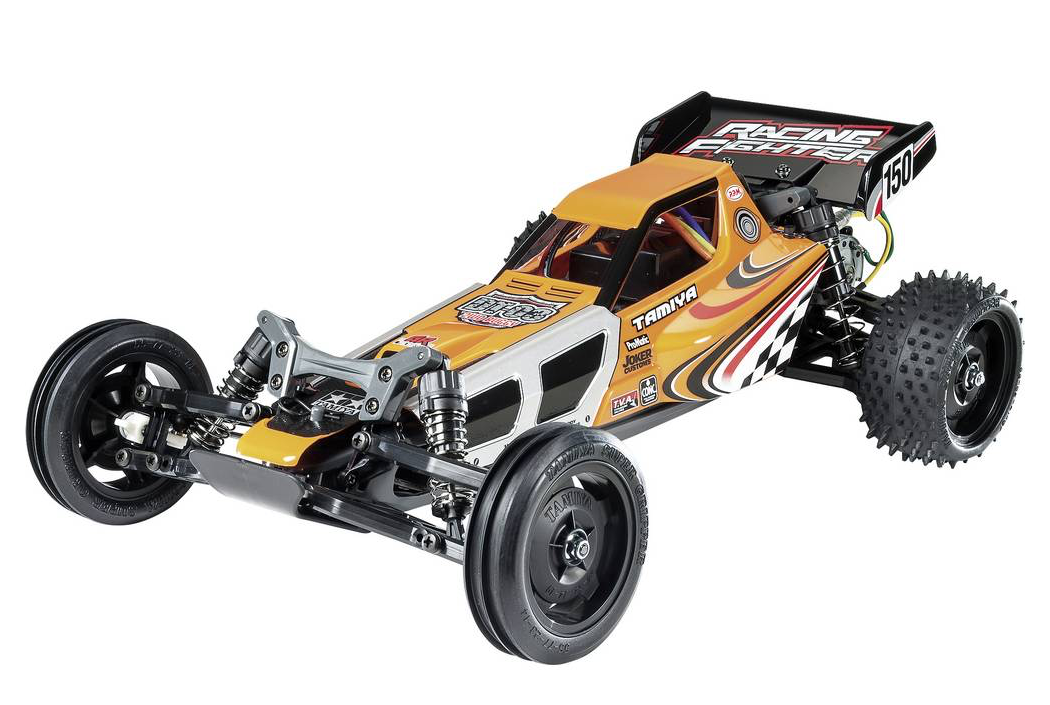
Tamiya DT-03
2WD buggy, ideal for children who are just starting with youth lessons.
Racing in events
Once you have the hang of driving and want to look further, there are several circuits and races in the Netherlands and just across the border in Belgium.
You can join events such as
Many clubs also organise open club races that guest drivers can join. That is useful, for example, when you want to learn a track before a Tamiya Cup race.
Extra items needed for races
Transponder required: Mylaps RC4, not the Pro. View it here. Expect around EUR 114, an investment you can use for years.
With the free Speedhive app, you can follow lap times live on your phone and even have them announced while driving.
Free MyRCM account: this is used to register for races. Create an account. This system is used by clubs and organisers worldwide.